

-
 admin
admin - 8th April 2026
These Tire Maintenance Misunderstandings, 90% of Car Owners Are Making
Many car owners have a consensus:
tires are the cornerstone of travel safety, but few people really pay attention to the daily maintenance of tires. Many people think that “as long as the tire does not blow out or leak air, there is no need for special maintenance”. Little do they know that these seemingly insignificant neglects are quietly shortening the service life of the tire and even laying hidden safety hazards. Today, we will take stock of those common tire maintenance misunderstandings and share practical maintenance skills to help you extend tire life and guard travel safety.
Myth 1:
The higher the tire pressure, the better, or the lower the safer. Many car owners think that high tire pressure can reduce fuel consumption, and low tire pressure can increase grip. In fact, both ideas are wrong. Too high tire pressure will lead to excessive wear in the center of the tire tread, reduce the shock absorption performance of the tire, cause bumps during driving, and significantly increase the risk of tire blowout; too low tire pressure will lead to excessive wear on both sides of the tire tread, increase rolling resistance, not only increase fuel consumption, but also accelerate tire body aging due to excessive tire deformation, and even cause tire damage due to overheating. The correct approach is to regularly adjust the tire pressure according to the tire pressure standard marked by the original factory of the vehicle, combined with seasonal changes and load conditions, generally checking once every 1-2 months.
Myth 2:
Long-term failure to rotate tires, ignoring the balanced wear of the four wheels. Tire rotation is a key step to extend tire life, but many car owners often ignore it. Due to the difference in vehicle drive forms, the wear speed of the front and rear tires is different. Long-term failure to rotate will lead to uneven wear of the four wheels, and some tires will reach the replacement threshold in advance, increasing the use cost. The correct approach is to rotate the tires every 5000-8000 kilometers, and adjust the tire installation position according to the vehicle drive form (front-wheel drive, rear-wheel drive, four-wheel drive) in accordance with the standard process to ensure balanced wear of the four wheels.
Myth 3:
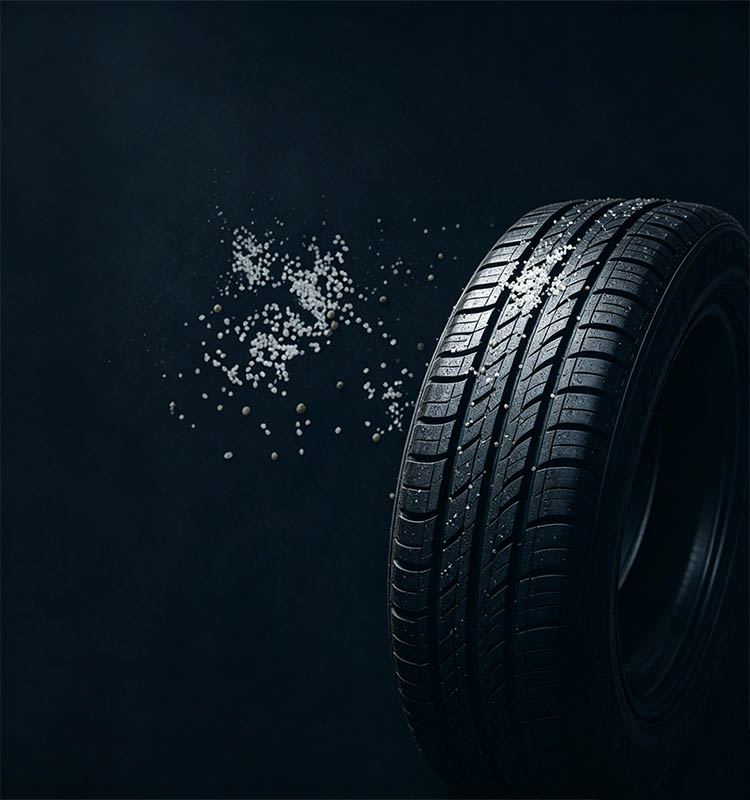
Tread foreign objects do not need to be cleaned and do not affect use. Many car owners see small stones, glass fragments and other foreign objects on the tread and think that “it does not affect driving and does not need to be cleaned”. However, if these foreign objects remain in the tread pattern for a long time, they will gradually wear the pattern, reduce the grip and drainage performance of the tire, and even pierce the tire body in severe cases, leading to tire air leakage and blowout. The correct approach is to timely clean up foreign objects on the tread before each trip or during regular tire inspection, and check whether the tire body has hidden dangers such as bulges and cracks to prevent problems before they occur.
In addition to avoiding these maintenance misunderstandings, scientific maintenance also needs to provide personalized solutions combined with the vehicle usage scenario. Our tire maintenance service is provided by senior technical teams on-site, covering core items such as tire pressure adjustment, tire rotation and dynamic balance correction. At the same time, we provide you with exclusive maintenance suggestions to keep the tires in the best performance state. Remember, there are no “small things” in tire maintenance. Every careful maintenance is a responsibility to your own and others’ travel safety.



 Related



Excellent Service Each and Every Time